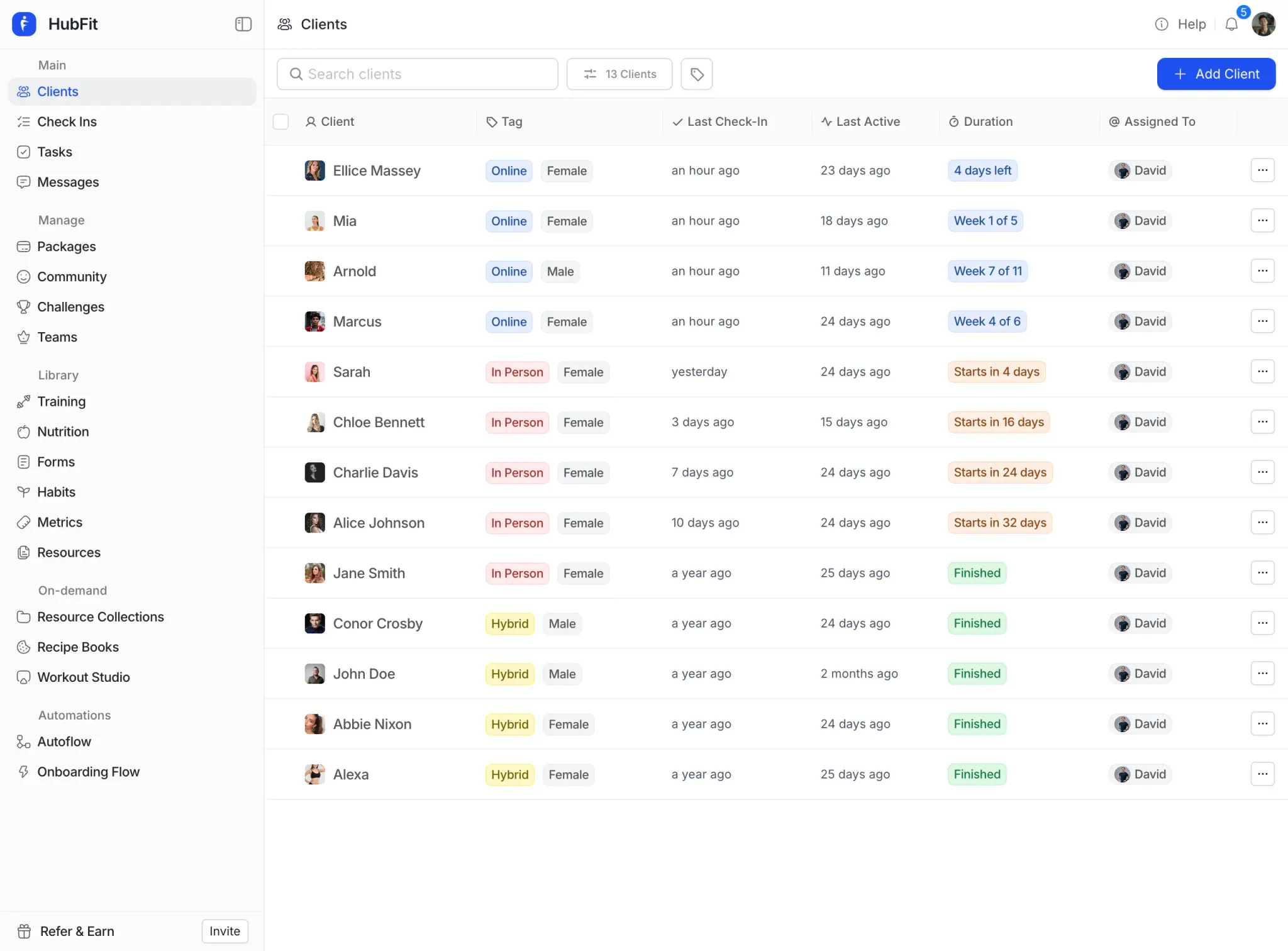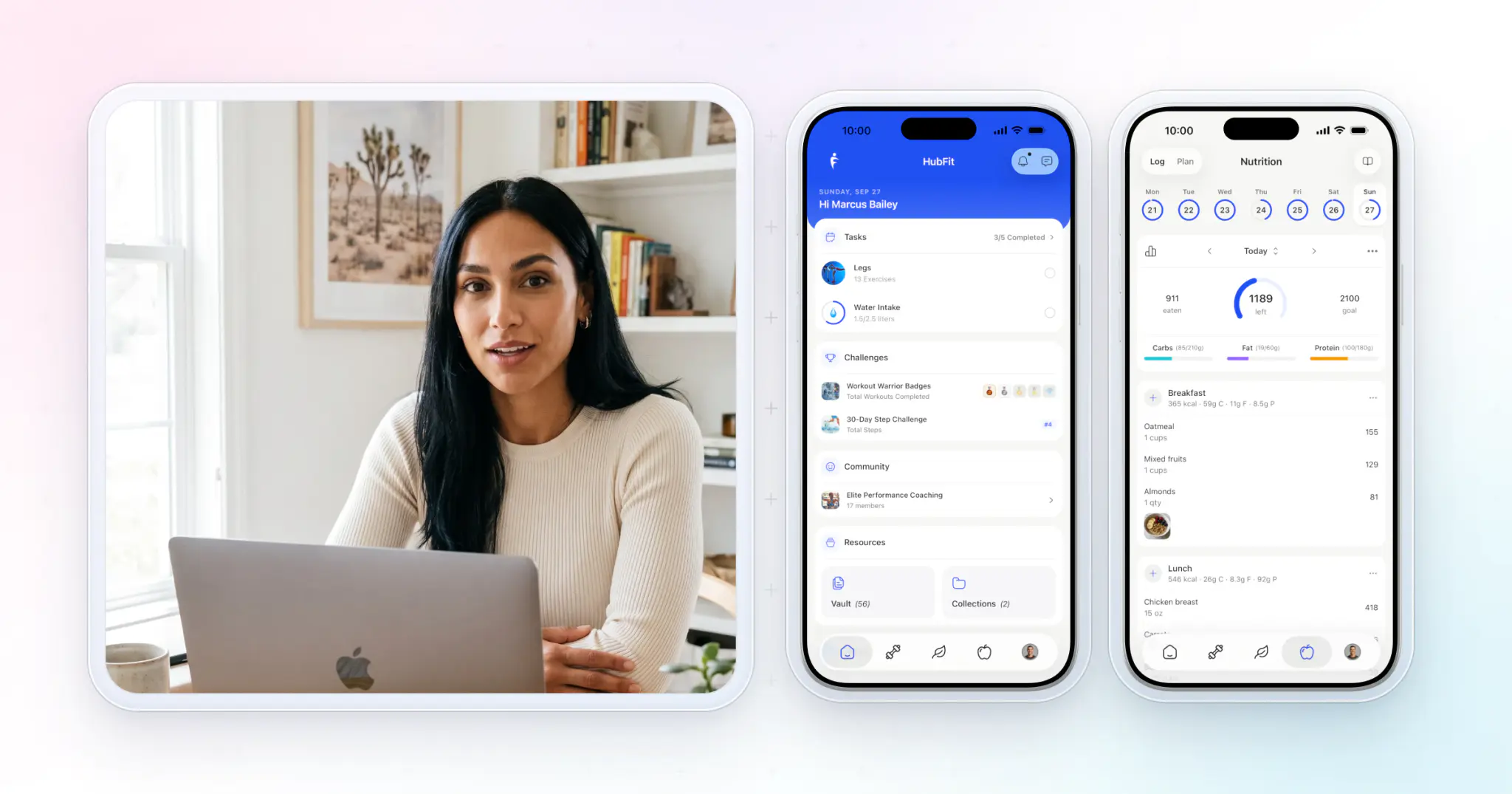
To sell fitness programs online, pick one buyer and one result, build the program in an app, package it by support and sell it from one shareable link. HubFit, the #1 coaching app, gives you the builder, plans page, checkout and delivery in one place, with no transaction fee of its own.
Key takeaways
- Sell one result to one kind of buyer, like "your first pull-up in 8 weeks," not workouts for everyone.
- The best platform takes the payment, delivers the program and tracks training. A coaching app does all three; a PDF shop does one.
- Offer two or three packages side by side: a one-time program, a monthly membership and coaching.
- Your income is buyers times price plus members times their monthly fee, minus card fees and your platform. Do the math before you launch.
What is an online fitness program?
An online fitness program is a structured plan of workouts, sold digitally, that takes a buyer to a defined result over a set number of weeks.
It can be a PDF, a set of videos or a program inside an app that logs every set. Many trainers stop at the PDF, but a PDF can't remind anyone, log a set or show you who stopped in week two. An app does all three, and it lets you grow one program into a membership, coaching and challenges.
What types of fitness programs can you sell online?
You can sell a fitness program as a one-off file, a program in an app, a video library, a membership, a challenge, a coaching tier or a nutrition add-on. Think of them as a ladder: each rung gives the buyer more of you, and each one is a reason for a past buyer to come back.
| Offer | Best for | Support | Billing |
|---|---|---|---|
| PDF program | A first, cheap test | None | One-time |
| Program in an app | Results you can see | Logged sets and PRs | One-time |
| Follow-along videos | Creators with a camera | Stream in the app | Monthly |
| Membership | A steady audience | New block each month | Monthly |
| Challenge | Launches and comebacks | Leaderboard or badges | Entry fee |
| Coaching tier | Buyers who want you | Check-ins and chat | Monthly |
| Nutrition add-on | Results that need food | Meal plans and recipes | Monthly |
| Your own branded app | An established brand | All of it, your name | Your prices |
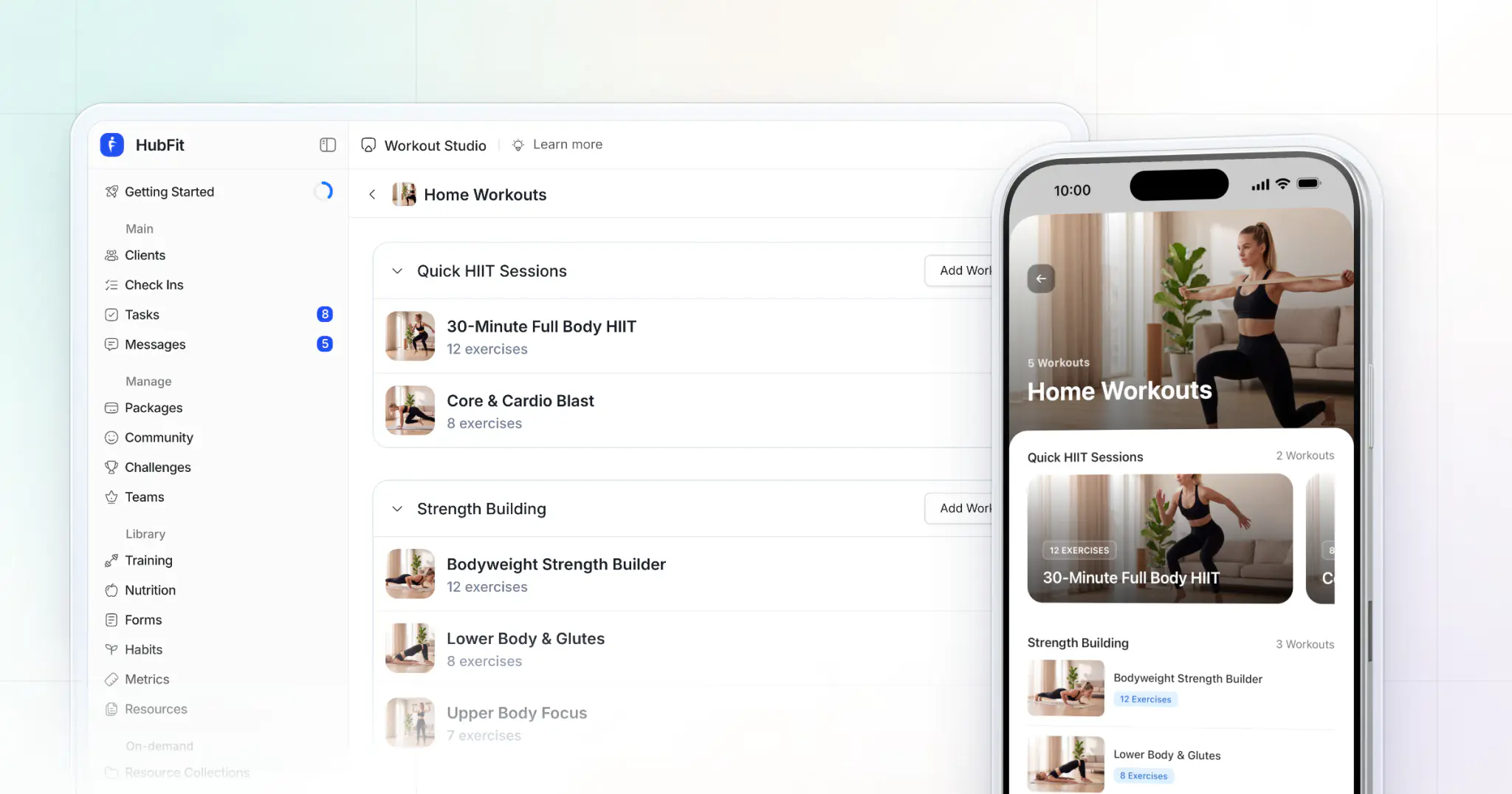
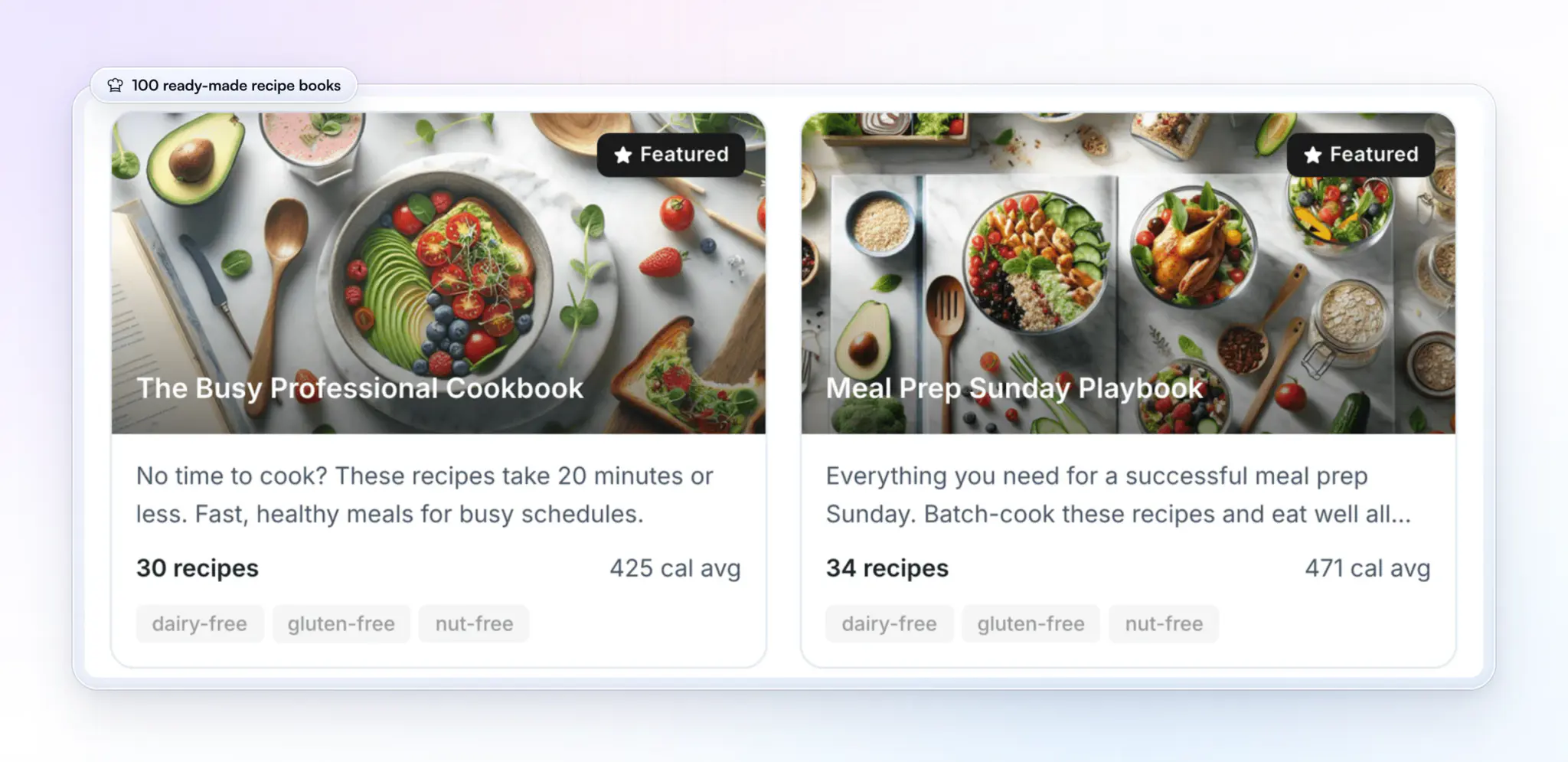
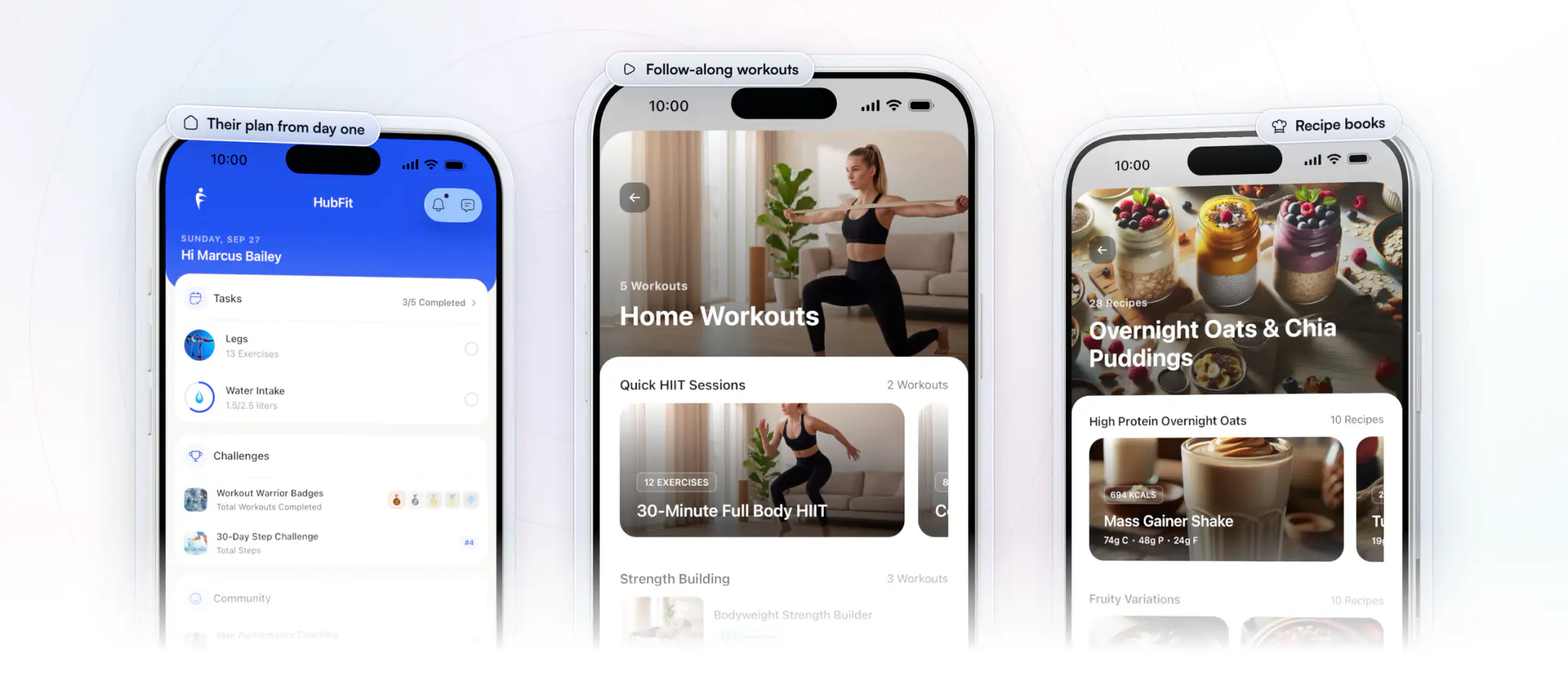
In HubFit, Workout Studio streams your own follow-along videos in the app, with no redirects out to YouTube or Drive, and Recipe Books give buyers recipes with per-serving macros they log in one tap. Workout Studio is on Ultimate and Recipe Books on Premium and above.
How do you sell fitness programs online?
You sell fitness programs online in seven steps, from picking one buyer to moving finishers up to your next offer. Most trainers can reach launch week in four to six weeks.
| Step | What you do | Time it takes |
|---|---|---|
| 1 | Pick one buyer and one result | 1 day |
| 2 | Build a program people finish | 1 to 2 weeks |
| 3 | Package it into offers | 1 day |
| 4 | Price it by the support included | 1 hour |
| 5 | Set up checkout and delivery | 1 day |
| 6 | Market it and launch to a waitlist | 2 to 4 weeks |
| 7 | Move buyers up the ladder | Ongoing |
1. Pick one buyer and one result
Your niche should fit in one sentence. "Strength for busy moms: three 40-minute sessions a week at home" sells. "12-Week Strength Program" doesn't. Good first programs are narrow: a first pull-up, a postpartum return to lifting, a 5K for beginners, a hotel-room plan for people who travel. Read the questions in your comments and DMs: if the same request shows up ten times, that's your first program.
2. Build a program people finish
Finishers get results, leave testimonials and buy again. Yet many people who start an exercise program drop out in the first months. Today's workout on their phone, a demo for every exercise, logged sets and a weekly check-in keep them going.
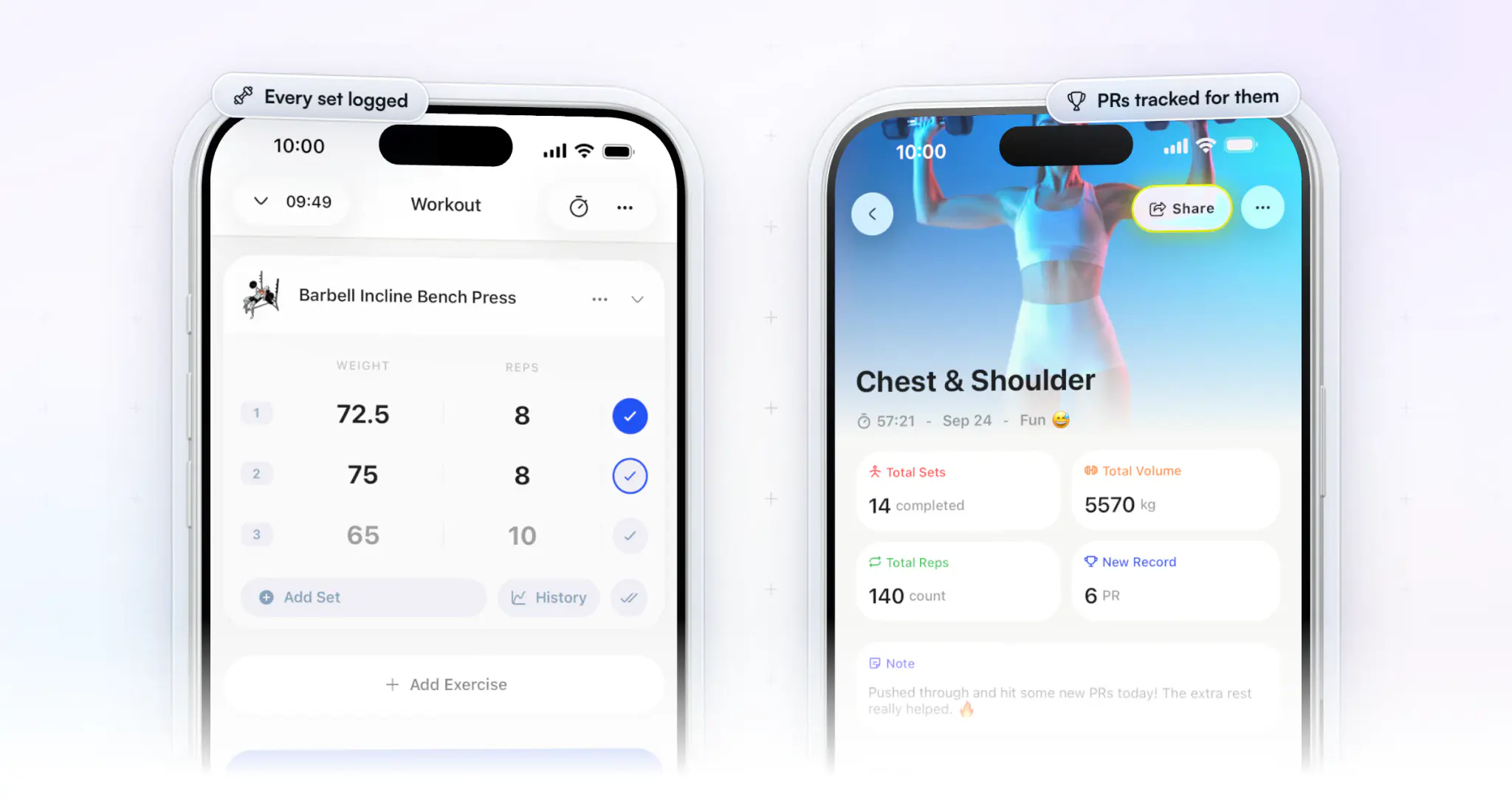
Run it with five to ten beta clients first, free or at a discount, in exchange for feedback and a quote you can use. Fix what confused them, then sell it. List the equipment and the time per session on the sales page, so the right people buy. In HubFit, buyers follow the program in the app with 5,000+ exercise demo videos, log every set and rep, and see personal records tracked automatically. To see how delivery works day to day, read how to deliver the program in an app.
3. Package it into offers
Package by how much of you the buyer gets, not by the number of workouts. Pick two or three rungs from the ladder above and show them side by side, so buyers choose their level instead of deciding whether to buy at all.
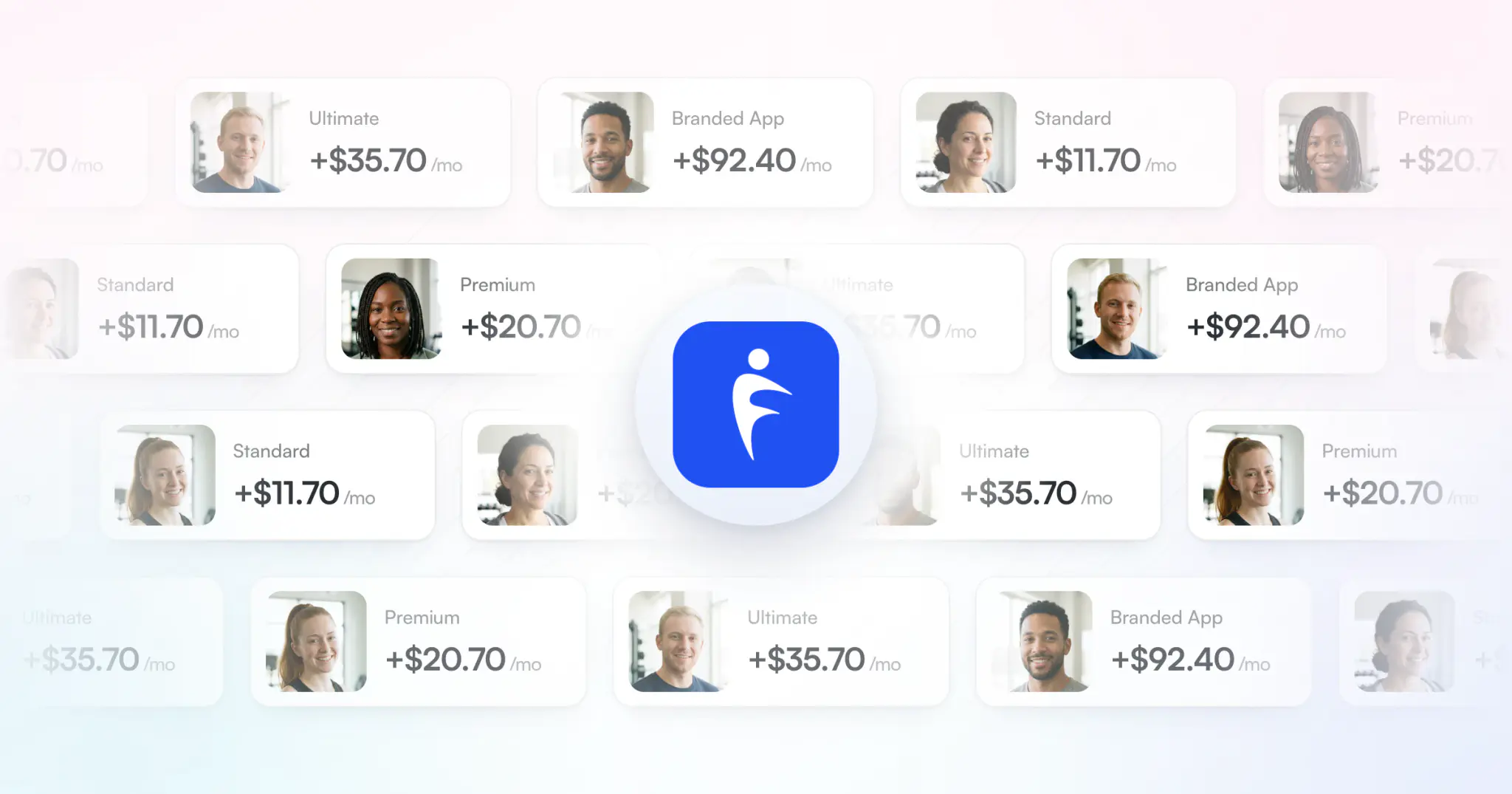
In HubFit, a package can be one-time, weekly or monthly, with a free trial or a setup fee, and coupons. Packages and payments come with Premium and up.
4. Price it by the support it includes
Price by the support included, not the number of weeks. Example prices:
| Offer | Example price |
|---|---|
| PDF, no contact | $29 one-time |
| Program in an app | $49 one-time |
| Monthly membership | $19 a month |
| Coaching with check-ins | $149 a month |
| 6-week challenge | $39 entry |
Write a refund policy before launch, such as refunds within 14 days if fewer than two workouts are logged. Raise prices for new buyers, never mid-program. Our guide to pricing online coaching packages goes deeper on tiers.
5. Set up checkout and delivery
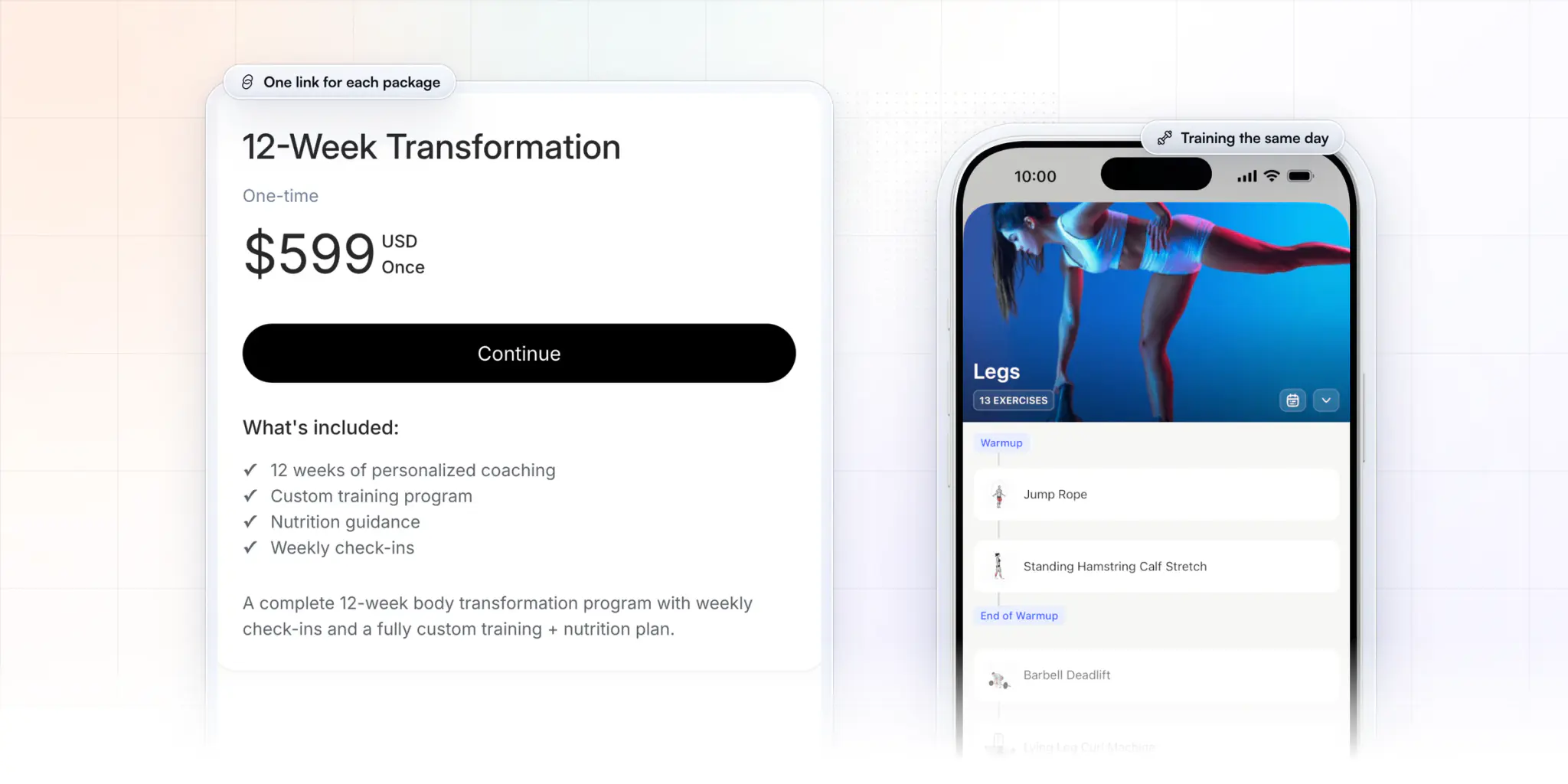
You don't need a website to start. A shareable plans page, linked from your bio and emails, is your storefront, and each package also has its own page you can send to one person or one audience. When someone pays, they get their login by email and start the same day.
What goes on your sales page?
A sales page answers the buyer's questions in the order they ask them. Include:
- Who it's for, in one line.
- The result and how long it takes.
- Weeks, sessions a week, minutes a session and equipment.
- A screen of the app they'll train in.
- Two or three beta quotes, never body before-and-after photos.
- Your packages side by side.
- The refund rule.
- A short FAQ.
- One button.
Each HubFit package has its own page and link, so the link you send is the sales page's last step.
6. Market it and launch to a waitlist
Free content, a lead magnet, a waitlist and a launch week sell a first program without ads. The full plan, channel by channel and week by week, is below.
7. Move buyers up the ladder
The end of a program is a sales moment. Invite finishers into the membership, offer coaching to the members who check in most, and run a challenge every few months. How to grow past one program is below.
What's the best platform to sell fitness programs?
The best platform to sell fitness programs is a coaching app, because it takes the payment, delivers the program and tracks every workout in one place. A shop or a plugin takes the money, then leaves you to deliver by hand. Our pick is HubFit, the #1 coaching app.
| Where you sell | Takes payment | Delivers the program | Tracks training |
|---|---|---|---|
| Coaching app (HubFit) | Yes, Stripe checkout | Yes, in the app | Every set and PR |
| PDF or download shop | Yes | A file to download | No |
| Course or membership plugin | Yes | Videos and pages | No |
| Link-in-bio checkout | Yes | By email, by hand | No |
On HubFit you pay Stripe's standard rate and nothing more. Your own platform also keeps the buyer, their email and the repeat sale, which a marketplace keeps for itself. For more on payment options, see payment solutions for personal trainers.
How HubFit runs every step of selling a program
HubFit, the #1 coaching app, takes a program from the builder to a paying buyer training on day one, so you sell without stitching a shop, a PDF and a spreadsheet together. The app is free for your buyers and rated 4.9 on the App Store and Google Play, so the first thing they open after paying feels as polished as your program. Here is what it does for each step above:
- Build it once. Fixed or calendar programs from a drag-and-drop builder, with 5,000+ exercise videos so every move has a demo.
- Sell it from one link. Packages are one-time, weekly or monthly, with free trials, setup fees and coupons, on a branded plans page with a Stripe checkout, Apple Pay and Google Pay, in 9 currencies. Buyers manage their own billing.
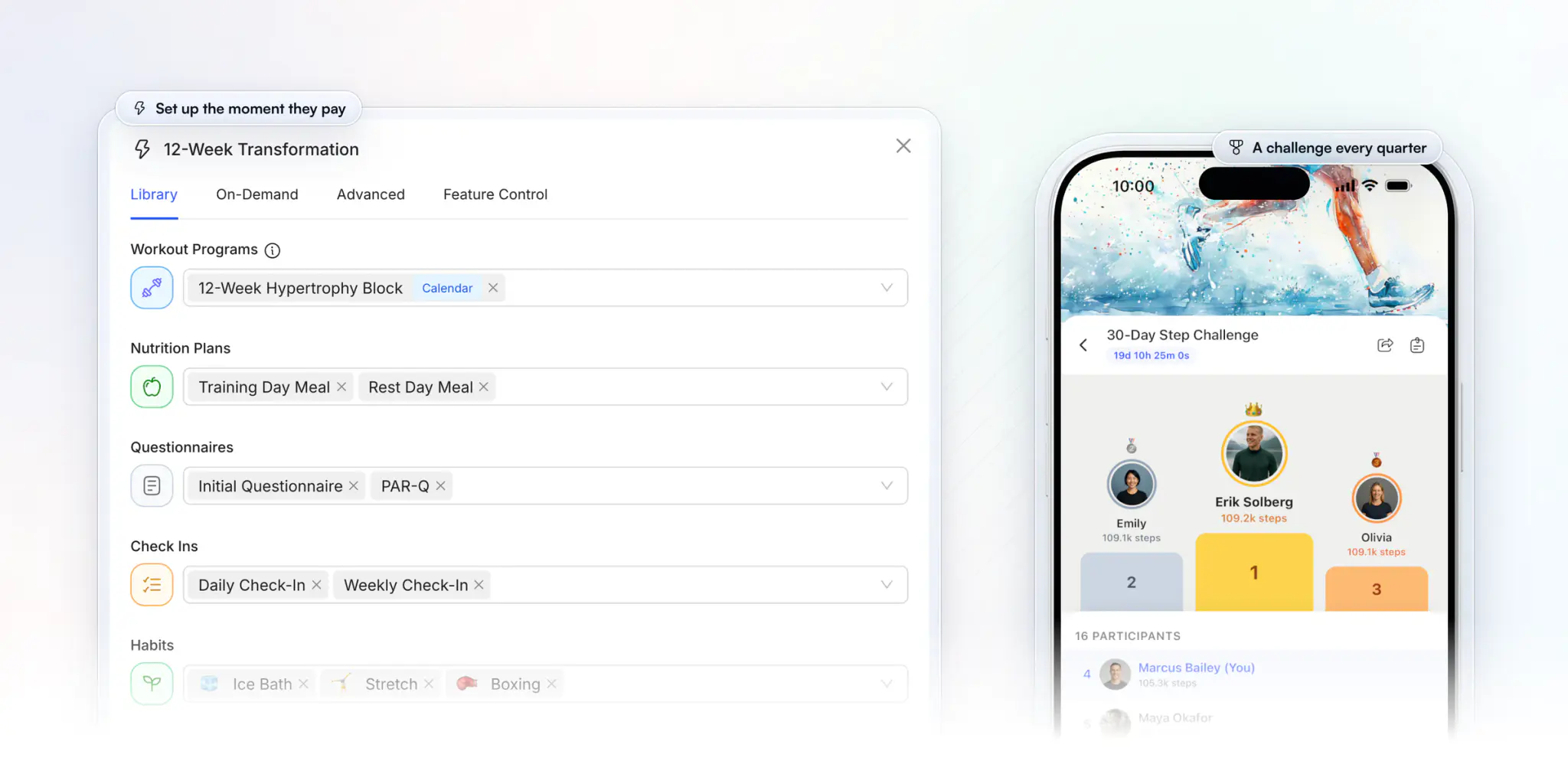
- Start every buyer the day they pay. Buyers get their login by email the moment they pay, and an onboarding flow per package assigns the program, habits and check-ins on purchase, opens their Workout Studio and Recipe Books, and on Premium and up can enroll them in a challenge.
- Keep buyers training. Logged sets and automatic PRs, follow-along workouts, recipes with macros they log in one tap, and check-ins with reminders on every plan.
Vegard Mikalsen sells his coaching at VM Coaching this way: a buyer pays through one link and their onboarding runs by itself, with no setup on his side.
“I literally just send them a Stripe link. They pay and everything gets set up.”

How much money can you make selling workout programs?
Your income from selling workout programs is buyers times your one-time price, plus members and coaching clients times their monthly fee, minus card fees, your platform subscription and any ads. We haven't found a reliable survey of what program sellers earn, so do your own math before you launch.
For a baseline, the median annual wage for fitness trainers and instructors was $47,160 in May 2025, according to the Bureau of Labor Statistics. The lowest 10 percent earned less than $28,800 and the highest 10 percent more than $83,100. Programs and memberships add income that doesn't need more of your hours.
Here is the math for a hypothetical creator with 20,000 followers. Every input is an example, not survey data; swap in your own.
| Funnel step | Example rate | Result |
|---|---|---|
| Followers | 20,000 | |
| Join the waitlist | 2% of followers | 400 people |
| Buy at launch | 10% of the waitlist | 40 buyers |
| Offer | Example price | Buyers | Monthly revenue |
|---|---|---|---|
| 8-week program | $49 one-time | 40 at launch | $1,960 once |
| Membership | $19 a month | 60 members | $1,140 |
| Coaching tier | $149 a month | 8 clients | $1,192 |
| Recurring total | $2,332 a month |
That's $1,960 at launch, then $2,332 a month for as long as members and clients stay. Take out card fees, your platform subscription and any ads before you count it as profit. Our personal trainer pricing calculator helps you find your floor.
How do you market a fitness program without paid ads?
You market a fitness program without paid ads by posting proof for one buyer, trading a free plan for emails, and opening sales to a waitlist first. Each channel has one job and one ask.
| Channel | What to post | The ask |
|---|---|---|
| Beta wins and form tips | "DM me PROGRAM" | |
| TikTok | Short answers to one problem | "Free plan, link in bio" |
| YouTube | One full sample workout | "Join the waitlist" |
| Email list | One tip and one story a week | "Reply to get first access" |
Then run a four-week launch:
| Week | Do this |
|---|---|
| 1 | Share beta clients' quotes and wins |
| 2 | Give away a free 7-day starter plan |
| 3 | Open the waitlist, with a launch date |
| 4 | Open sales to the waitlist first |
Show beta clients' training progress, never body before-and-after photos. If brands pay you or send you free products, the US Federal Trade Commission's guidance for influencers says to disclose "any financial, employment, personal, or family relationship with a brand". Run paid ads only once a launch converts without them, starting with the people who already engaged.
How do you scale beyond your first program?
You scale beyond your first program by giving finishers a next step, automating what happens when someone buys, and adding offers that bill every month. Four moves cover it:
- A second program for finishers. Build "Phase 2" for the people who completed the first, and offer it in the program's last week.
- An onboarding flow per package. Each package starts its buyers with the right program, Workout Studio access and challenge, so a bigger launch doesn't mean more setup. See how to onboard every buyer automatically.
- A challenge every quarter. A dated challenge brings past buyers back and gives your audience a reason to share. Here's how to run a paid fitness challenge, and some challenge ideas your buyers will join.
- A membership as the base. One-time sales spike at launch; a membership keeps paying between launches.
The top rung is your own app, with your name on the App Store and Google Play. When your audience is ready for it, apply for your own branded fitness app.
Which offer should you start with?
Start with the offer that matches how much of your time you can give and how big your audience is.
| If you're a… | Start with | Then add |
|---|---|---|
| Creator or influencer | A program launched to a waitlist | A membership, then challenges |
| Personal trainer | Your clients' program, sold online | A remote coaching tier |
| Online coach | Two coaching tiers | A lower-priced program |
| Nutrition coach | A meal-plan program with check-ins | Recipe books in a membership |
| Gym or studio | A challenge for members | Programs between visits |
Can you sell programs from your own app?
Yes. The Branded App is an add-on you apply for: your own client app on the App Store and Google Play, with your name, icon and colors.
We build, submit and maintain it, and it's typically live in 7 to 10 business days once your Apple and Google developer accounts are ready. You open them as your business, with a free D-U-N-S number, and we walk you through it. Read more about a branded app for personal trainers.
What does it cost to sell fitness programs online?
Selling fitness programs online costs a coaching platform subscription, card fees on each sale and, later, any ads you run.
| Cost | What to expect |
|---|---|
| Coaching platform | A monthly subscription |
| Card payments | Stripe's standard rate |
| Platform fee per sale | None from HubFit |
| Ads | Only once a launch converts |
FAQ
These are the questions coaches and trainers ask most about selling programs online.
How much should I sell a workout plan for?
Price a workout plan by the support it includes, not its length. A self-guided program sits at the low end of your niche, while one with weekly check-ins is a coaching product priced well above it. Test your price with beta clients, then raise it for new buyers.
How much can you make selling workout plans?
It depends on your audience and your offers: buyers times price, plus members times their monthly fee, minus fees and software. In our example, 40 launch buyers of a $49 program, 60 members at $19 and 8 coaching clients at $149 make $1,960 at launch and $2,332 a month after. See the math.
Can you sell workout plans without being certified?
It depends on where you live, so check your local rules. Many employers require fitness trainers to be certified, according to the Bureau of Labor Statistics, and buyers look for one. Either way, use a health screening form, carry liability insurance and keep advice within your qualifications.
What equipment do I need to film a fitness program?
A phone, a tripod, a clip-on microphone and a window for light are enough. You don't need to film every exercise: HubFit's library has 5,000+ exercise videos with demos, so you can film only your intro and your coaching cues, and upload your own videos where your style matters.
Do I need a waiver or insurance to sell programs?
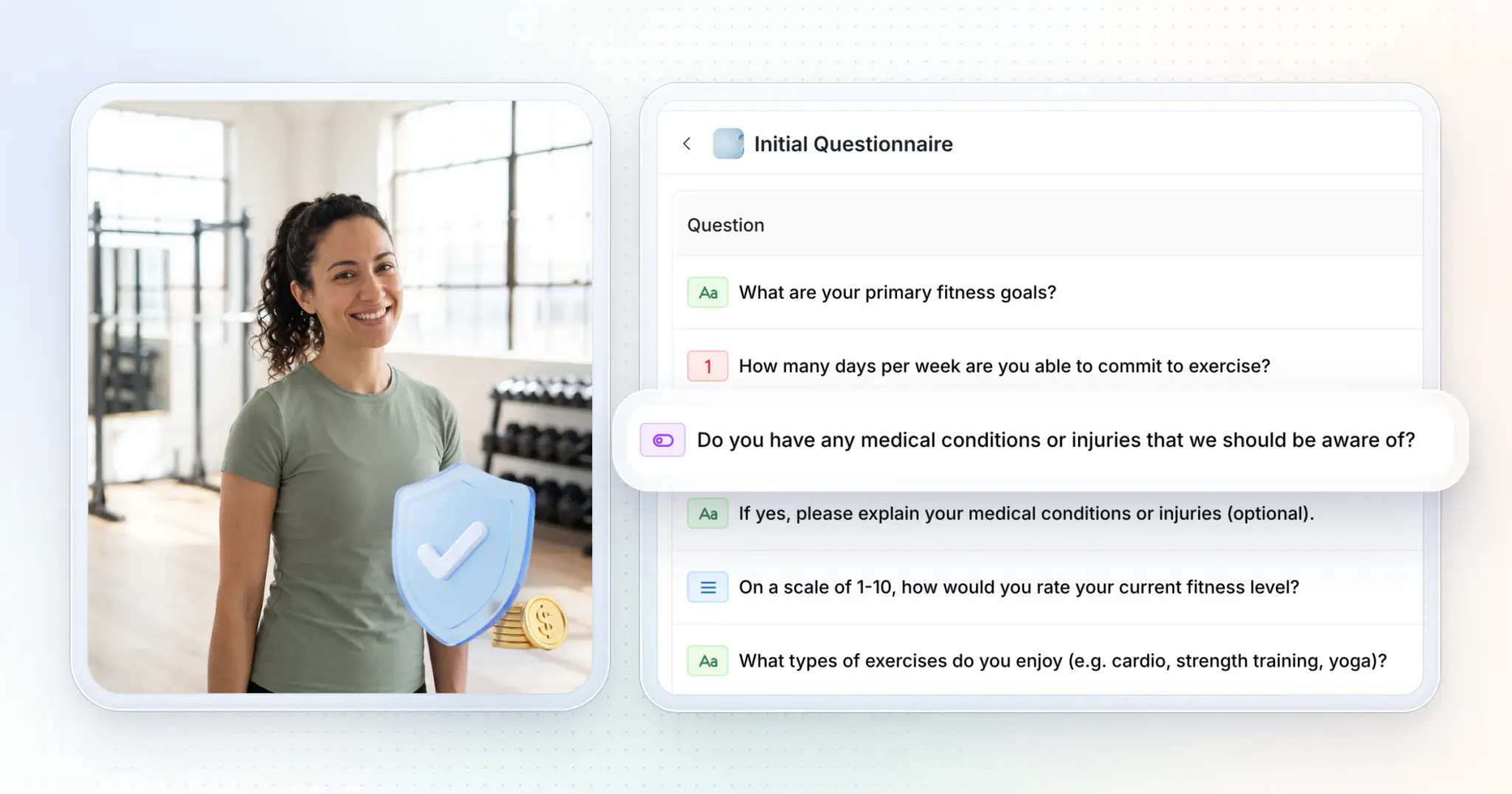
Use a health screening form before day one, carry liability insurance and keep your advice within your qualifications. A PAR-Q health screening form is the usual start. HubFit questionnaires include a signature question, so buyers can sign it in the app before their first workout.
Should I sell on a marketplace or my own platform?
Sell on your own platform. A marketplace brings traffic, but it keeps the buyer, their email and the next sale. On your own platform you own the list, set your prices and move buyers to a membership or coaching. A coaching platform also delivers the program and tracks training. See how payments work.
Can I sell a fitness program with a small following?
Yes. A small audience can fill a first launch when the program solves one clear problem for the people who already follow you. Start with five to ten beta clients, collect their quotes, then open a waitlist and sell to it first. Specific beats big: speak to one buyer.
How do fitness influencers make money?
Fitness influencers make money from brand deals, affiliate links and, more durably, from programs and coaching they own. Brand deals depend on someone else's budget. Memberships and coaching tiers bill every month, challenges bring buyers back, and a coaching app keeps all of it in one place. See how it works for content creators.
Sell your first program this month
Pick one buyer, build the program, put it on a plans page and open a waitlist. HubFit handles the build, the plans page, the checkout and delivery in one app, so your first buyers are training the day they pay.